AI didn't break demand gen. It just moved the job.
73% of B2B websites lost organic traffic last year. Meanwhile, 94% of marketers are using AI to produce more content. The math doesn't work. The job isn't content production anymore. It's demand detection.
73% of B2B websites saw significant traffic losses between 2024 and 2025, with an average 34% year-over-year decline. Over the same period, 94% of marketers started using AI for content creation, and content budgets climbed to 26% of total marketing spend.
More money. More content. Less traffic. The industry is pressing the gas while the road narrows.
Content production became a commodity overnight
The funnel model assumed that content was expensive to produce and scarce in the market. If you could publish consistently, you’d attract attention over time. That held for years because production was genuinely hard: research, writing, design, distribution, all competing for limited headcount and budget.
AI compressed that entire cost structure in under a year. Every company can now produce at the volume that only well-funded content teams managed before. The bottleneck moved. Production used to be the advantage. Now it’s table stakes.
The result is what you’d expect from any market where supply surges and demand stays flat: the value of each unit drops. Organic CTR drops 61% on queries where AI Overviews appear. Zero-click searches surged to 69% between 2024 and 2025. Buyers are getting their answers before they ever reach your site.
If your demand gen strategy is still organized around a publishing cadence and a content quota, you’re optimizing a channel that’s shrinking by the quarter.
The demand isn’t missing. You’re just not finding it.
Here’s where the data gets interesting.
6sense surveyed nearly 4,000 B2B buyers for their 2025 Buyer Experience Report. The headline finding: 95% of the time, the winning vendor was already on the buyer’s Day One shortlist. Not after a nurture sequence. Not after a whitepaper download. Before any of that happened.
Buyers fill that shortlist based on prior experience, peer recommendations, and the content they found on their own terms. 94% of buying groups rank their vendor preferences before they ever initiate contact with a sales rep. The vendor ranked first wins roughly 80% of the time.
The demand exists. It’s forming right now in conversations, AI queries, peer channels, and review sites your analytics can’t see. The question isn’t how to generate more of it. It’s whether you’re catching the intent that’s active right now.
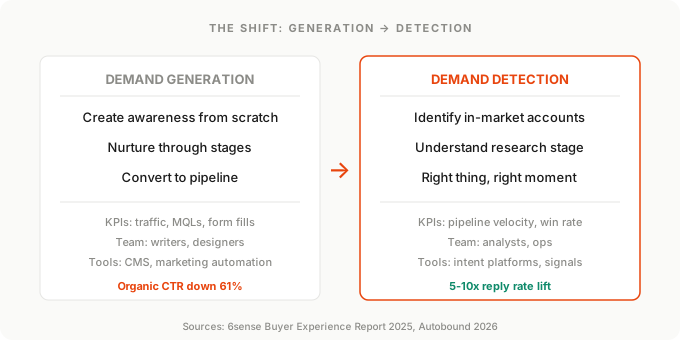
Generation vs. detection
Most demand gen teams are still built for generation: create awareness that didn’t exist, nurture it through stages, convert it into pipeline. The entire workflow assumes you’re building demand from scratch.
The 6sense data says otherwise. Your buyers have already researched. They’ve formed opinions. They’ve built shortlists. What they need from you isn’t another ebook. It’s the right information at the exact moment they’re evaluating.
That’s a different job. Call it demand detection: identifying accounts that are actively in-market, understanding where they are in their research, and showing up with the right thing at the right time.
The signal-based outreach data from Autobound’s 2026 analysis makes the gap clear: campaigns built around buyer signals outperform generic outreach by 5-10x on reply rate. The intent data market hit $4.49 billion in 2026 and is growing at 16.6% annually. The infrastructure for detection exists. Most teams just haven’t reorganized around it.
What this changes
If detection is the job, then the demand gen team’s value isn’t measured in content pieces published or MQLs generated. It’s measured in how early you identify active research and how fast you respond to it.
That reframes hiring (analysts and ops, not just writers), tools (intent platforms and signal enrichment, not just CMS and marketing automation), and KPIs (pipeline velocity and win rate, not traffic and form fills).
The team that produces the least content and detects the most intent will outperform every content factory in their category. That’s a hard thing to accept for organizations that built their entire demand gen function around an editorial calendar.
But the buyers already moved. The question is whether your team moves with them.